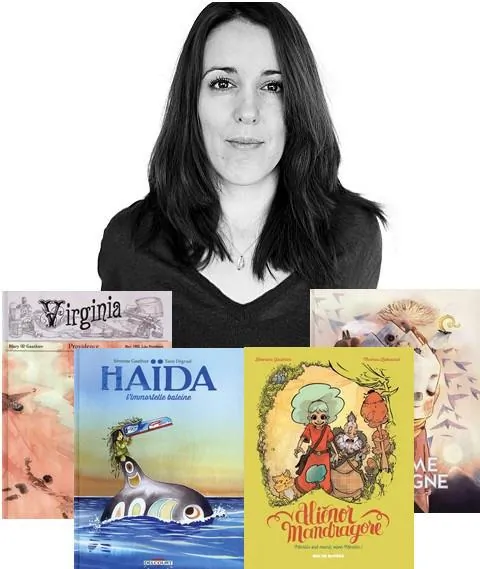

There are writers whose stories seem to float between two worlds; for Séverine Gauthier, it’s the world of childhood and the world of adult emotions.
She is one of those rare authors whose every book is a gateway to tenderness, melancholy, or legend.
Over the years, Séverine Gauthier has become one of the most unique and sensitive writers in French comics.
While her name is now associated with poetic and profoundly human works, nothing initially destined her to become a graphic novelist.
After graduating from high school with a focus on literature, she pursued English studies, which she continued in Kent, Great Britain. Upon returning to France, she became a teacher, a profession she still practices alongside her writing.
But behind teaching lies creation.
From a very young age, Séverine has been doodling, imagining, and telling stories. She began by drawing, then quickly realized that her true talent lay in screenwriting.
Her first graphic novel, Noodles!, created with Thomas Labourot and published in 2006, marked the beginning of a prolific career, in which she quickly established a distinctive style: a dense, sensitive, and deeply personal body of work.
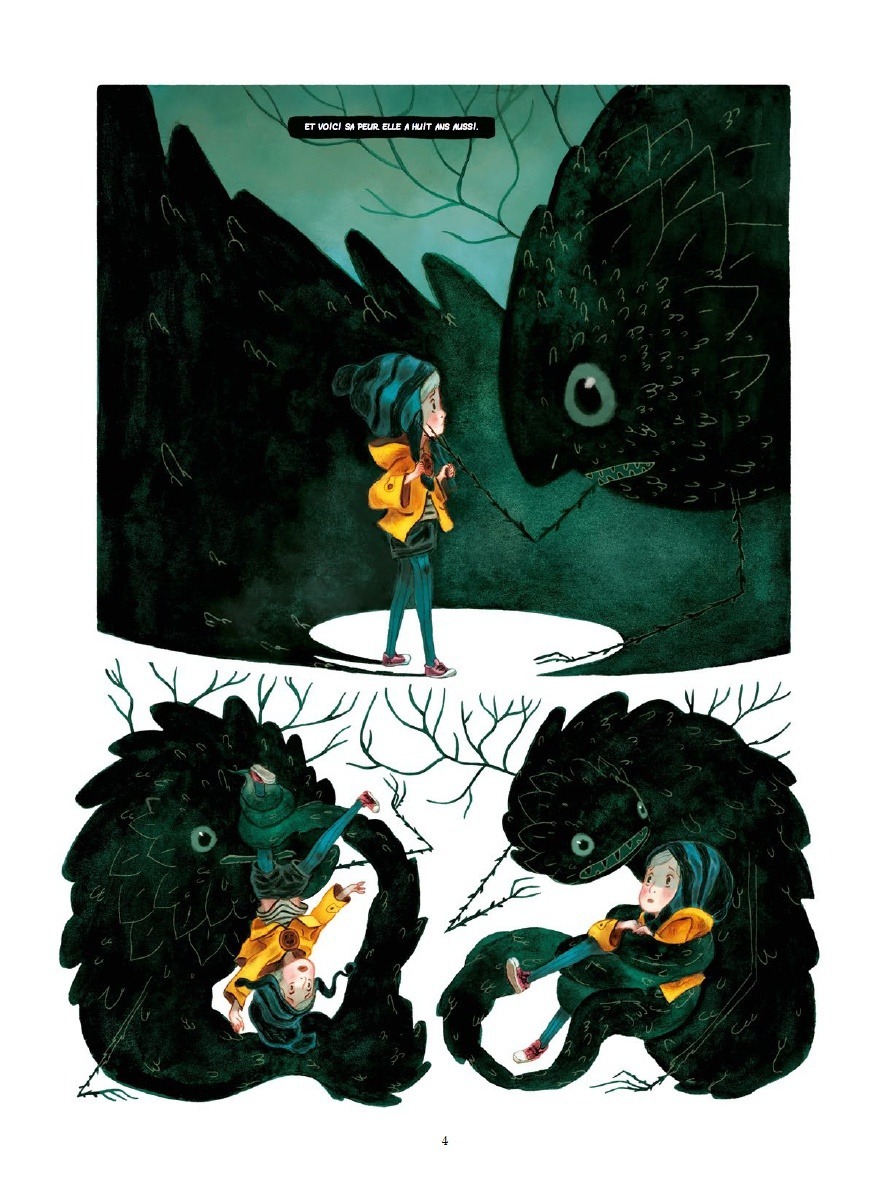
Her writing oscillates between poetry and raw emotion, as evidenced by books such as “Coeur de Pierre“, whose alexandrine verse text accompanies Jérémie Almanza’s captivating illustrations, telling the story of a boy born with a heart of stone, incapable of love.
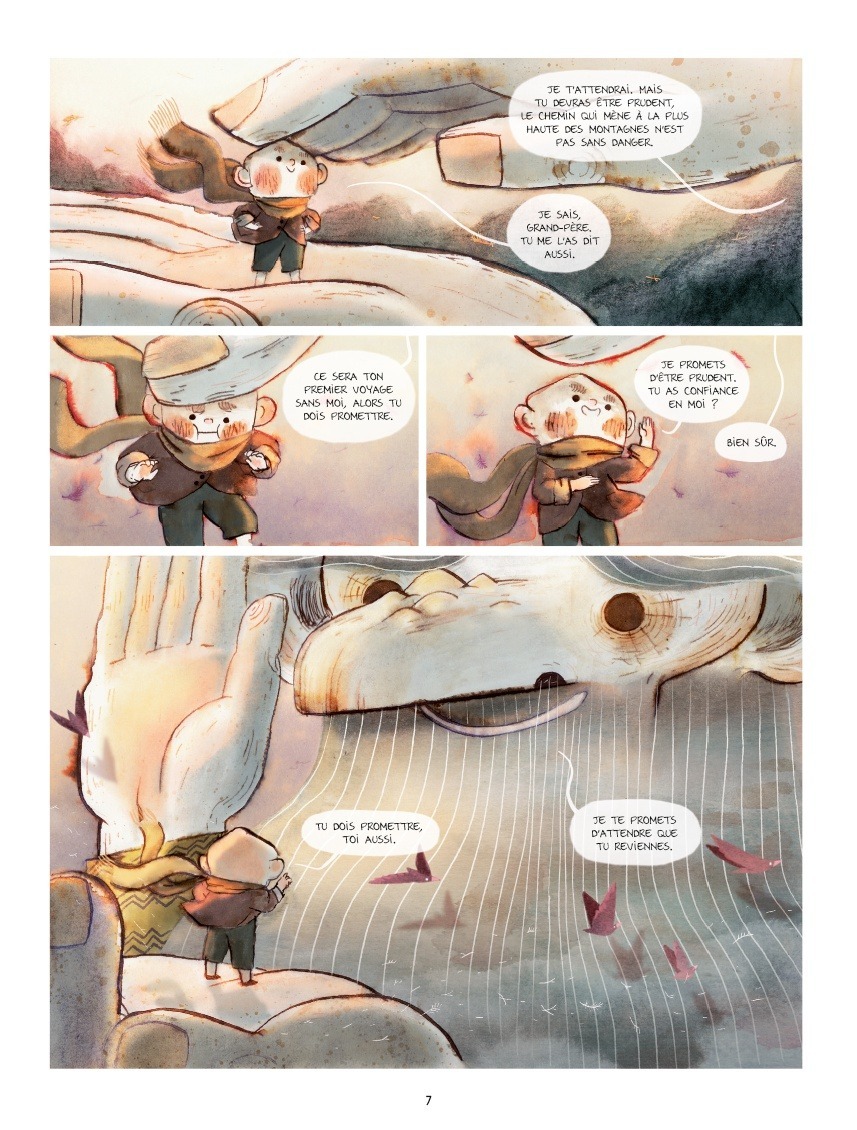
Or “L’Homme Montagne“, co-created with Amélie Fléchais, which gently explores the themes of travel, grief, and legacy. The author demonstrates a rare ability to speak to both children and adults: she knows how to write for children without ever simplifying, and for adults without ever losing the magic.
Séverine Gauthier is distinguished by her interest in folktales, mythologies, and coming-of-age stories. Furthermore, her long-standing interest in Native American peoples informs several of her works.
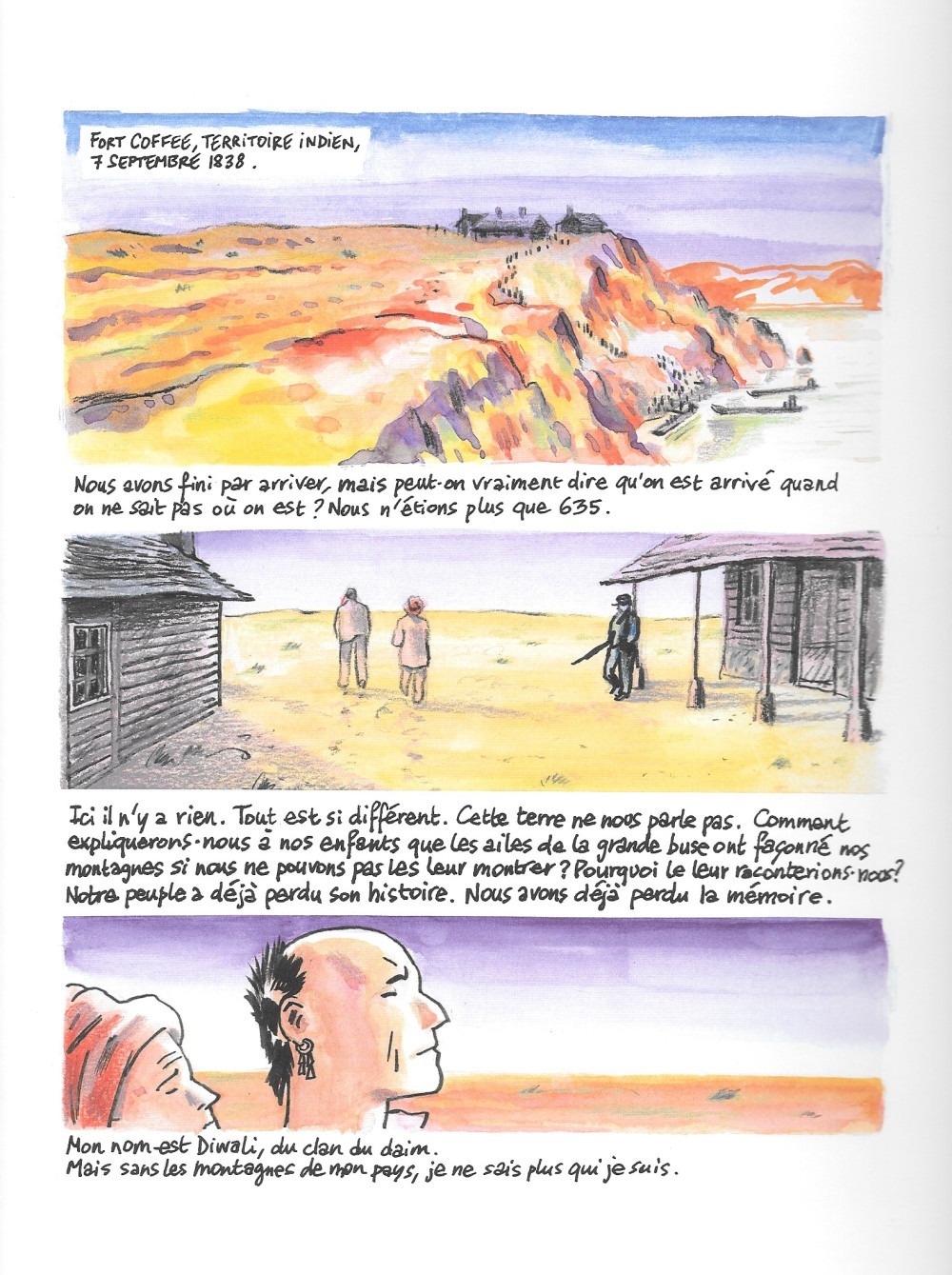
In La Piste des Larmes, she recounts the tragic deportation of the Cherokee people; in Haida, the Immortal Whale*, she revisits the legends of the North Pacific.
In her work, research never overwhelms the narrative; it enriches it. These books are imbued with a profound respect for the cultures they evoke.